

Is PMS Really “Normal”? Understanding What's Common vs. What's Healthy
Every woman talks about it: PMS. Premenstrual syndrome can really be debilitating to many menstruating women, regardless of age. While mild symptoms can occur, experiencing severe PMS that interferes with your daily life can be a sign from the body that something is off.
What is PMS?
Premenstrual syndrome is a combination of symptoms that come about before a menstruating woman starts her period. There are both physical (bloating, sore breasts, fatigue, headaches, acne) and emotional symptoms (irritability, insomnia, mood swings, change in appetite, anxious or sad) associated with PMS, but women can experience and be affected by it in different ways.
When Does it Start?
PMS typically starts about a week or two before a period, also known as the luteal phase. Specifically, the later half of the luteal phase.
In my previous blog series, “Get to Know Your Hormone Cycle,” I share an overview of each phase of the menstrual cycle as well as a dedicated blog for each phase. Click each link below for a more detailed explanation, but for this blog, I will keep it short and simple.
Breakdown of each cycle phase: An average cycle length is 24-35 days, with an average being 29 days.
Menstruation: Menstruation begins on the first day of bleeding and is considered day 1 of a cycle.
Follicular: Occurring after menstruation, the follicular phase typically falls on days 6-13.
Ovulation: Synonymous with being the “all-star” of menstruation, ovulation is where many women feel their best selves: confidence is boosted, you feel more motivated to socialize, and you have more energy. Ovulation typically surrounds day 14 of a cycle for 1-2 days.
Luteal: The luteal phase is the longest phase–lasting anywhere from days 15-28. Hormones estrogen and progesterone both fluctuate during this phase, so it is common to view the luteal phase as two different stages. During the first stage, it’s typical to have similar symptoms as ovulation. The second stage is where PMS slowly starts to make its appearance.
Once bleeding occurs, PMS symptoms should improve.
What's Common vs. What's Normal?
Experiencing mild changes or symptoms of PMS is considered more common and normal, whereas severe pain, debilitating mood changes, migraines, heavy bleeding, or symptoms that disrupt work, relationships, or daily activities are not considered normal.
Why Does PMS Occur?
As a functional nutritionist, I focus on the root cause of symptoms by deploying holistic tools and having a food-forward approach to healing. For PMS, the root cause can be traced back to having a hormonal imbalance like estrogen dominance or low progesterone, blood sugar dysregulation, chronic stress and elevated cortisol, poor estrogen detoxification, nutrient deficiencies, inflammation, and poor sleep.
THE GUT-HORMONE CONNECTION
The health of the gut is also vital to hormone health–so vital that there is a name for the way they communicate: gut-hormone connection. Think of this connection as a communication stream between the gut microbiome and the endocrine system (the system responsible for hormones). They depend on each other in a few different ways and hormonal issues can lead back to poor gut health (and vice versa!).
The gut microbiome helps metabolize and eliminate estrogen.
To learn more about estrogen detoxification, check out my previous blog, “Estrogen Detoxification: Why It Matters.”
There is a direct relationship between estrogen metabolism and gut dysbiosis where dysbiosis can be a contributor to estrogen dominance.
Constipation can contribute to estrogen recirculation.
The gut is a major site for thyroid hormone activation, or converting T4 to T3. Issues involving the gut can lead to hormonal imbalances with the thyroid such as hypothyroidism.
The gut is home to about 70% of the immune system, which holds the power in driving and producing inflammation, and leading to low progesterone, blood sugar dysregulation, and other hormonal imbalances.
Menstrual cycles can be key indicators for health. It’s important to not ignore the signs and warnings the body may be signaling through other parts of the body like our gut microbiome. Each phase can be used as a tool to understand emotions, feelings, hunger cues, energy levels, and as indicators to push yourself or slow down. When we support our cycle, we support our health!
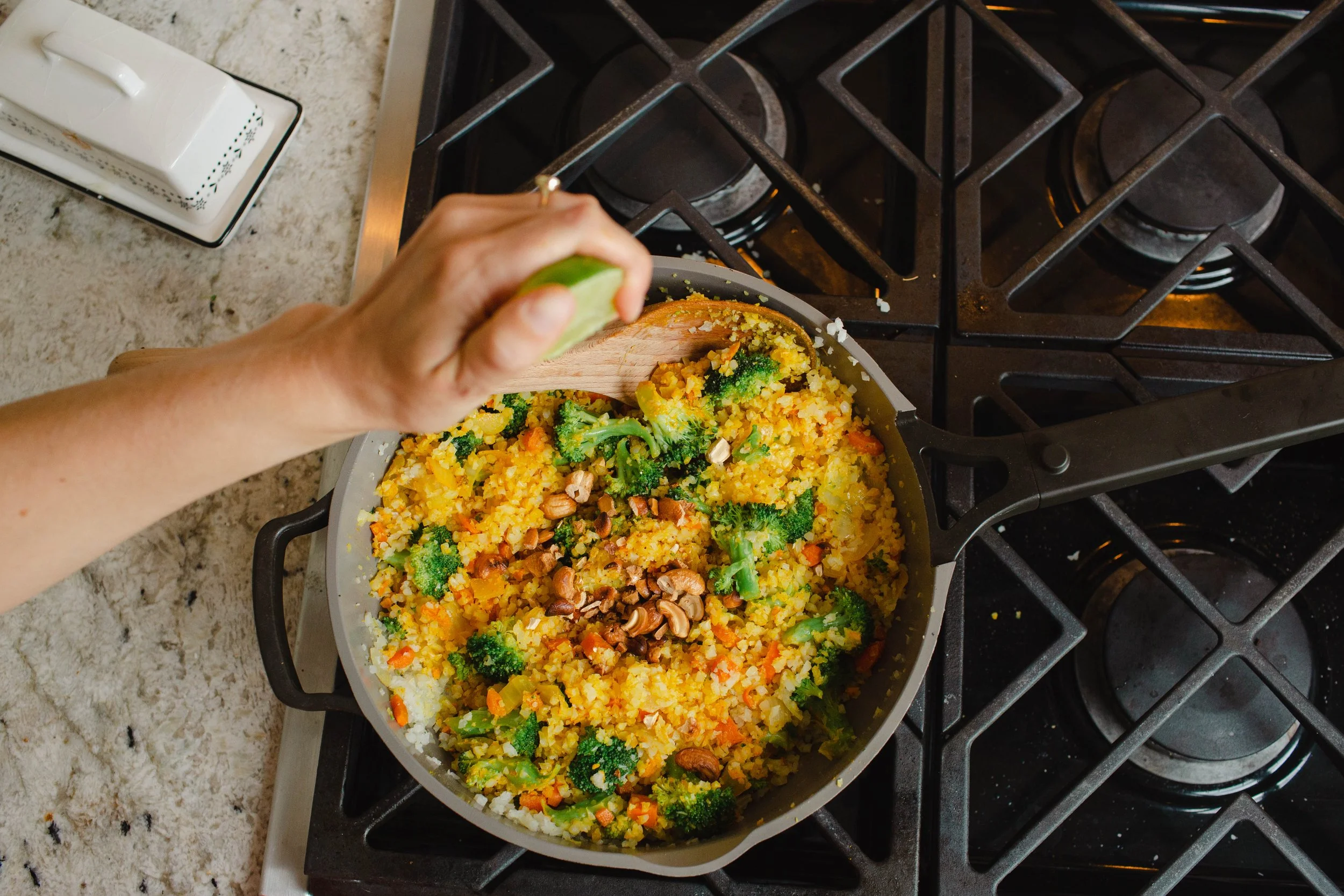
Nutrition to Support PMS
Prioritize protein at every meal.
Increase fiber to support estrogen elimination.
Eat omega-3-rich foods.
Include magnesium-rich foods (pumpkin seeds, leafy greens, almonds).
Limit alcohol and ultra-processed foods, especially before your period.
When to Look Deeper: If PMS is severe or worsening, consider evaluating:
Comprehensive hormone testing
With my Hormone Health Intensive, I use the DUTCH Test, the most comprehensive method of testing that measures your sex and adrenal hormones and their metabolites, as well as relevant nutrients and neurotransmitters.
Thyroid function
Iron status
Vitamin D
Blood sugar markers
Gut microbiome testing
With my Gut Health Intensive, I use the GI-MAP Test. It’s an at-home stool test that reveals imbalances in “good” and “bad” gut bacteria, digestive enzyme output, yeast and parasites, inflammation, gluten sensitivity, and more.