

Are Low-Impact Workouts Better for Overall Health?
Low-impact exercises and “functional movement” have grown in popularity as more individuals choose to ditch high-intensity workouts for slower and more mindful ways to move. The biggest push for this type of movement is to find relief from burnout, bodily stress, and the negative effects of an overloaded nervous system, while still prioritizing regular exercise.
It’s not about pushing your body to the maximum every day; it’s about focusing on the foundations of simple daily movement for your mind and body while understanding that both can benefit from a variety of exercises. Ready to unlock the root of why more people are choosing low-impact exercises? Let’s dive in.
Stress and Cortisol
In order to discuss how exercise impacts stress or cortisol levels, let’s start with the key functions of cortisol. As a steroid hormone produced by the adrenal glands, cortisol is synonymous with being the “stress hormone.” In many cases, cortisol is used in a negative way, with individuals experiencing the adverse health effects of having chronic stress with elevated cortisol levels. It’s important to remember that cortisol is not always bad. In fact, it’s crucial to survival and absolutely necessary for long-term health! Here are some benefits of cortisol:
Energy-giver: It helps utilize glucose for fuel, especially after waking or through stressful moments.
Helps modulate sleep-wake cycles: Our body works on an internal clock called the circadian rhythm. Cortisol is the highest in the morning, allowing us to wake up and fuel our day. It reaches its lowest point in the evening, replaced by the hormone melatonin.
Supports blood pressure: Cortisol helps maintain a healthy blood pressure, maintaing circulation, preventing dizziness, and fatigue.
The problem with cortisol is when there is too much built up in the body from chronic stressors, leading to chronic disease. As a way to manage daily stressors and cortisol production, lifestyle changes, such as adjusting certain exercises at specific times, may be necessary to find balance.
How Does Exercise Impact Cortisol
To continue the list of benefits of cortisol, the hormone is also necessary for stress resilience. One of the best ways to increase stress resilience is engaging in regular exercise, but depending on the individual, reframing movement and turning to low-impact exercises may be the answer to overall stress management.
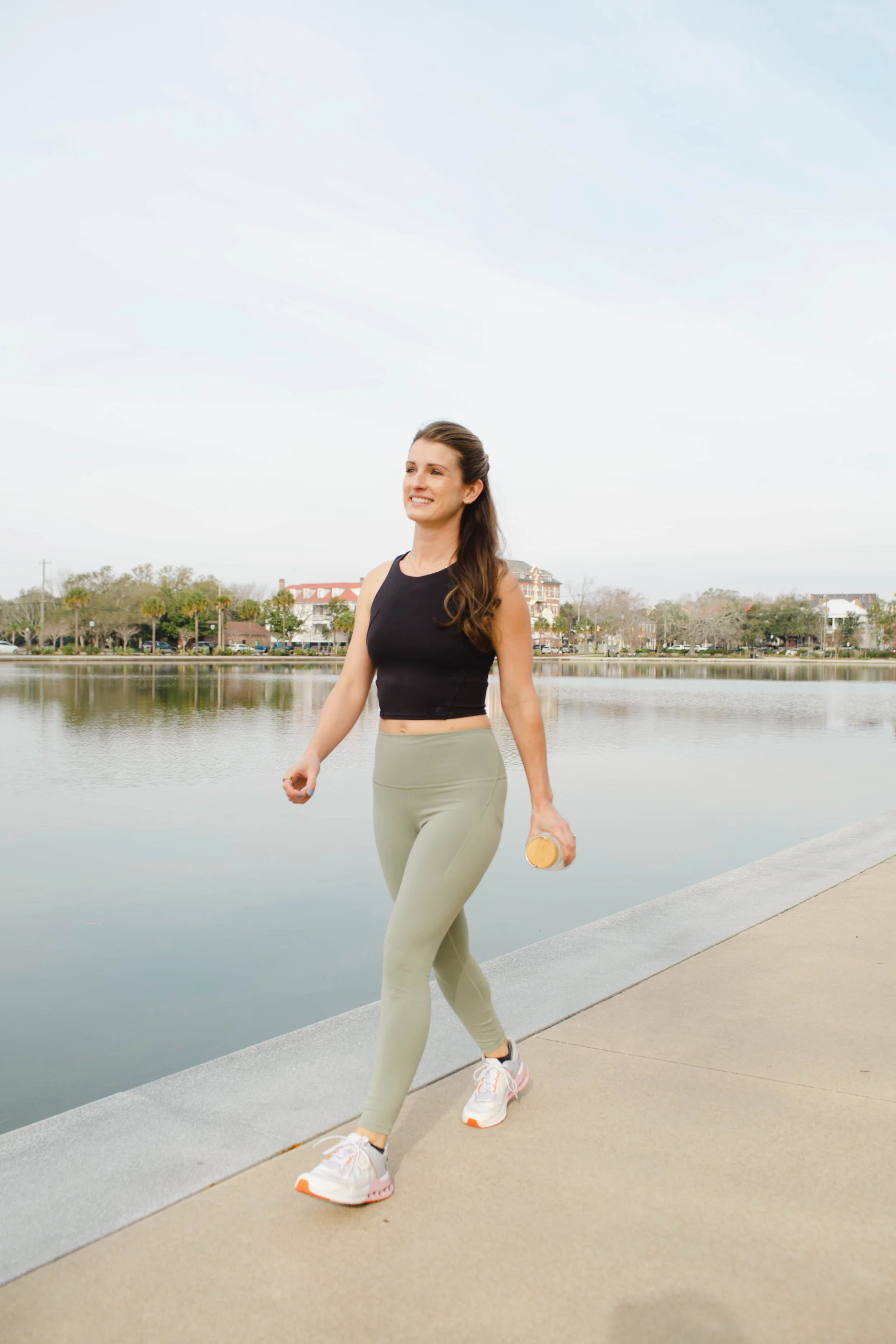
Some of my favorite low-impact exercises that help me ground and re-center myself:
Walking, pilates, yoga, and body weight exercises. Engaging in mindful breathwork is great too!
As I have seen with many of my clients experiencing hormone disruption, gut immobility, and the symptoms involved in both, I make sure we do a deep dive into their habits and routines, such as physical activity. Movement is medicine, but the way exercise supports the body is much greater than burning the most amount of calories or solely valuing a workout based on how hard you can push yourself–it’s about using the right tool at the right time.
Common mistakes I hear as a functional nutritionist when it comes to exercise:
1) Doing high-intensity workouts daily
2) Ignoring recovery and stress load
3) Thinking low impact = not “enough”
4) Not adjusting workouts based on cycle or lifestyle
The biggest area I see this with my clients is not syncing workouts with their menstrual cycle. Because hormone levels fluctuate throughout each cycle phase, with an average cycle length being 24-35 days, so should diet and exercise. Here is a brief overview of the phases of menstruation and movement recommendations:
Menstruation:
Menstruation is the first day of bleeding and also day 1 of your cycle. Most women bleed between 3 and 7 days.
Recommended movement: Stretching, pilates, walking, yoga, light resistance training
follicular:
Occurring after menstruation, the follicular phase typically lands on days 6-13.
Recommended movement: Running, jogging, dancing, biking, weight lifting, resistance training, body weight exercises
ovulation:
Following the follicular phase, ovulation typically lasts 1-2 days surrounding day 14.
Recommended movement: Strength training, cycling, interval training, running, group fitness classes
Luteal:
Coming in the last part of the menstrual phase is the luteal phase. This typically lasts anywhere from day 15 to 28.
Recommended movement: The first half of the luteal phase (coming off of ovulation), it’s common to still have high energy and stamina. For the first half, movement such as running, interval training, cycling, and group fitness classes are great! Right before menstruation, energy dips as hormones also do, so it’s the time to support the body with gentler movement like walking, yoga, pilates, and bodyweight exercises.
To read more about mensuration, the follicular phase,ovulation, and the luteal phase, click the links to dive into my Hormone Cycle Series!
There are many factors that contribute to individuals experiencing symptoms of high cortisol, such as feeling overwhelmed, burnt out, and overly exhausted. During these times, it’s most important to lean into grounding routines that bring your mind and body back to alignment.
Whether it’s an extra recovery day focusing on stillness or pushing for an extra rep or mile, it’s less about labeling certain exercises “better” or “worse” than it is listening to what movement your body is craving.
Want to learn more ways to support your nervous system and balance hormones?
Tap below!